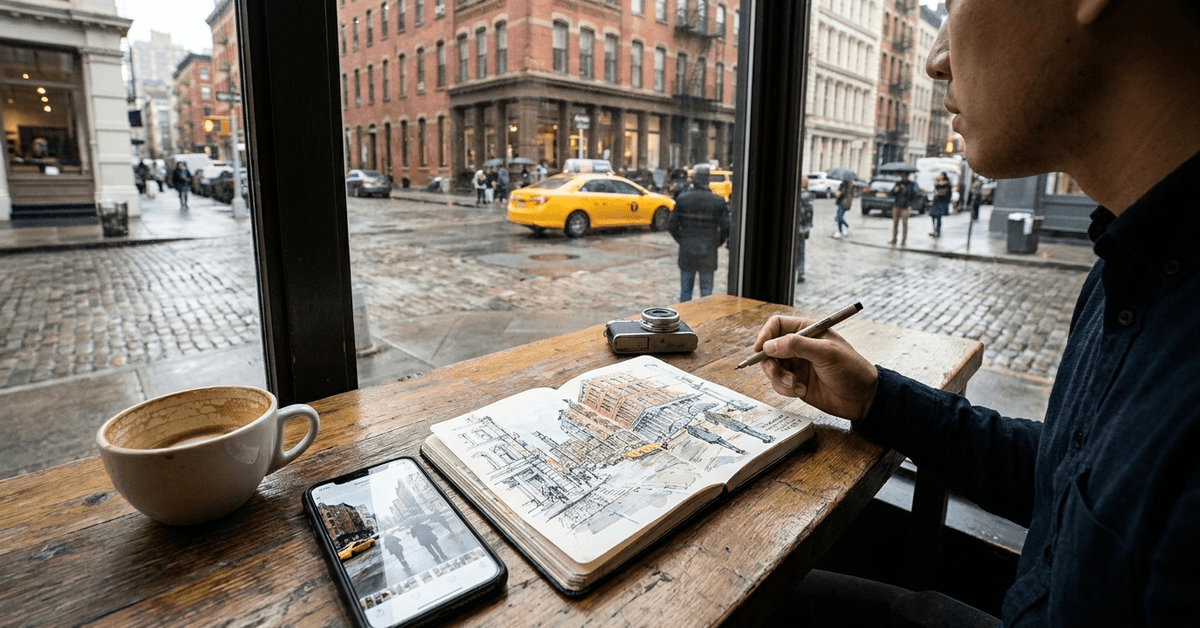
Documenting city life can uncover surprising details and capture unforgettable moments. A daily sketch or photo journal works well for creating a unique personal archive. Urban residents, tourists, and creatives can all benefit.
This article explains how anyone can start a daily city journal, what tools truly matter, and how the right approach keeps you motivated. Whether you live in a bustling metropolis or a quiet neighborhood, these methods can transform your perspective.
Why Documenting City Life Is Worthwhile
A daily sketch or photo journal builds a visual memory bank. Street scenes are always changing—sketches or snapshots freeze those moments.
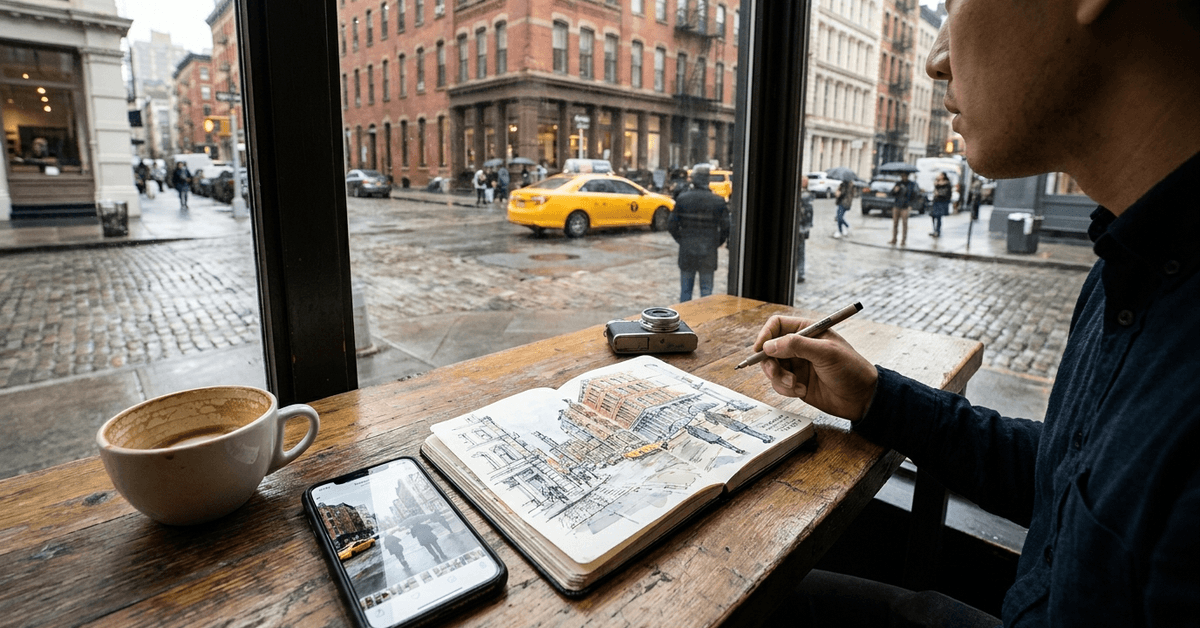
Reflecting on your journal can spark ideas, sharpen your observation skills, and even support mindfulness. Sometimes, the act of slowing down enough to sketch or photograph is the real reward.
Choosing Between Sketching and Photography
Traditional sketching and digital photography each offer unique advantages. Deciding between them depends on your interests, time, and confidence in drawing or tech.
Benefits of Sketch Journaling
Sketches are personal representations of scenes. They interpret mood, movement, and atmosphere.
- Slows your experience, helping you notice subtle details.
- Improves hand-eye coordination and focus over time.
- Low-equipment: Usually just a notebook and a pen are needed.
Benefits of Photo Journaling
Photos quickly capture authentic urban life. Quality is not dependent on art skills—just observation and timing.
- Allows rapid documentation of fleeting moments.
- Easy to organize and share digitally.
- Smartphones are often sufficient—no fancy camera needed.
Essential Tools and Resources
Best Supplies for Sketching
A portable sketchbook is perhaps the most critical tool for daily urban journaling. Durable covers protect your work inside a backpack.
- Pocket-sized hardcover sketchbook (like Moleskine or Leuchtturm1917)
- Fine liner pen or mechanical pencil
- Small watercolor set (optional for color washes)
Best Apps for Photo Journaling
Photo journals thrive with user-friendly apps. Instant uploads and geotagging bring out the best in urban photo logs.
- Day One: Organize images by date, location, and tags
- Evernote: Handy for adding notes to photos and syncing across devices
- Google Photos: For easy storage and automatic backups
Setting Up Your Journal Routine
Finding Your Time and Place
Success with journaling depends on realistic routines. Most people fit short sketch or photo sessions into lunch breaks, commutes, or city walks.
- Pick a consistent time of day that matches your energy
- Have supplies ready in your everyday bag or phone
- Choose routes you normally walk to keep things convenient
What to Capture: Urban Inspiration
Cities like Paris, Seoul, and Chicago offer endless sketch or photo options. However, even quieter places have character—bus stops, street vendors, corner cafés.
- People: Unique street fashion, daily routines, city dwellers at work or play
- Architecture: Unusual doors, graffiti, hidden courtyards, skylines
- Nature: City parks, rooftop gardens, animals adapting to urban life
Tips for Making Urban Journaling a Habit
Urban journaling becomes easier when the routine feels flexible rather than demanding. The goal is to notice more about your surroundings, not to produce a perfect page every day.
Keep Expectations Manageable
Daily entries do not need to be polished. Some days may lead to a detailed sketch, while others result in a quick note, a blurry photo, or a single sentence.
Focus on the habit of observing rather than the quality of the finished entry. Giving yourself permission to create imperfect pages makes it easier to continue.
Use Small, Repeatable Prompts
Simple prompts can remove the pressure of deciding what to document. Try recording one color, one sound, one sign, or one unexpected detail each day.
Even a short entry can preserve a strong memory when it captures something specific.
Add Stories, Not Just Images
Photos and sketches become more meaningful when paired with context. Write down the weather, the mood of the street, a passing conversation, or a smell from a nearby café.
Captions do not need to sound literary. A few honest words can bring the moment back more clearly later.
Try Theme Weeks
Themes keep the routine fresh and encourage you to explore familiar places differently. Possible ideas include “City Buses,” “Reflections,” “Doorways,” or “Neon Nights.”
Join Creative Challenges
Look for sketch walks, photo challenges, or local journaling groups. Online prompts and shared projects can provide motivation when your routine starts to feel repetitive.
Exchanging ideas with other journalers may also introduce new techniques, neighborhoods, and subjects worth documenting.
Sharing and Preserving Your Urban Journal
An urban journal can become a lasting record of the places, people, and everyday details that shape city life. Choosing the right format helps you organize your work, share it with others, and preserve it for future reference.
Use Instagram for Quick Updates
Instagram works well for daily photo series, short captions, and location-based storytelling. Relevant hashtags can connect your posts with local artists, photographers, and neighborhood communities.
Build Longer Projects on Behance
Behance is better suited to polished visual projects, including sketch collections, architectural studies, and themed photography series. It allows creators to present work in a more professional and organized format.
Create a Personal Blog
A blog provides more space for detailed reflections, personal stories, maps, and longer descriptions. It also gives you greater control over how your journal is arranged and archived.
Document the City Responsibly
Ask Before Photographing People
Request permission before taking close or identifiable photographs, especially when children are involved.
Follow Local Photography Rules
Street photography, private property, and commercial-use regulations vary between cities such as New York, Berlin, and Tokyo. Review local guidelines before publishing images.
Protect Sensitive Information
Keep entries private when they include personal addresses, routines, conversations, or information that could compromise someone’s safety or privacy.
Conclusion: Make Urban Journaling a Lifelong Adventure
Starting a daily sketch or photo journal reveals hidden aspects of your city life and fuels creativity year-round. Equipment is easy to carry, routines adaptable, and inspiration appears in the smallest corners—whether in vibrant cities or quiet towns.
Looking back through months or years of entries can shape a deeper connection with your surroundings.
Maybe not every day will result in a masterpiece, but every effort matters. Journaling urban life offers something lasting for anyone willing to pause and look closer.