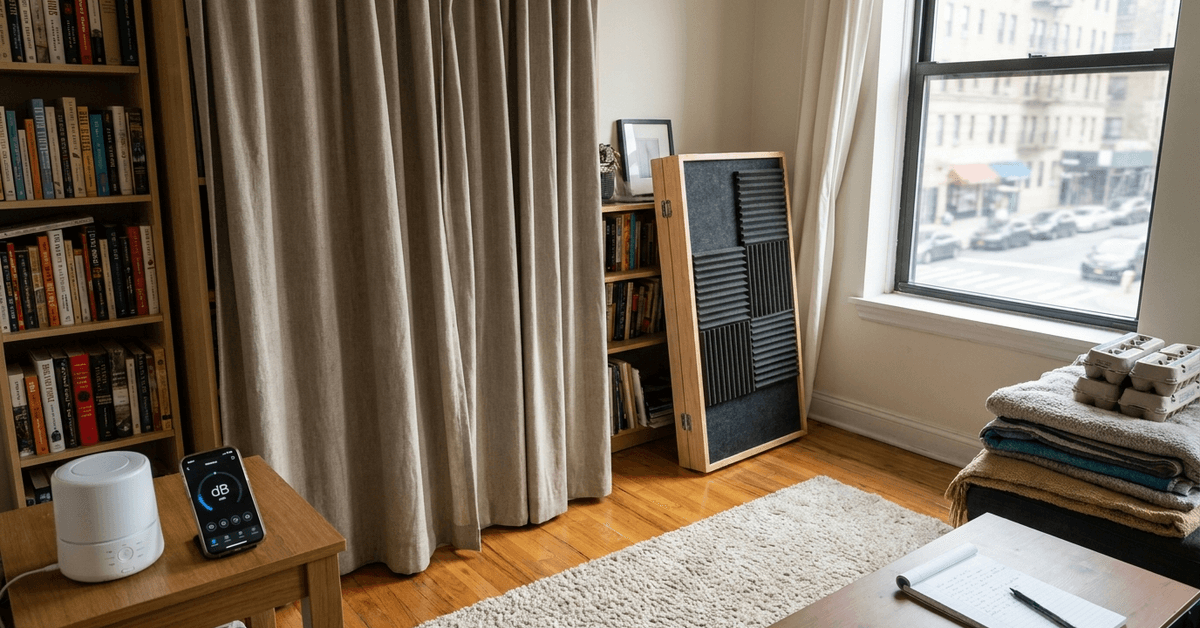
Peace and quiet can sometimes feel out of reach in a busy city apartment. Shared walls in urban buildings often mean hearing neighbors’ music, footsteps, or even daily routines, especially in cities like New York, London, or Berlin.
Anyone living in apartments with thin walls knows the struggle. There are effective solutions that do not require a full renovation or violating rental agreements.
Discover practical soundproofing hacks for city dwellers—with actionable tips, specific tool suggestions, and strategies suited for everyday life.
Why Shared Apartment Walls Let in So Much Noise
Shared walls are notorious for allowing sound to pass through. Many buildings use thinner materials to maximize space cost-effectively, commonly seen in city centers such as Paris or Toronto.
The problem feels even worse in older buildings with little insulation.
Thin Walls and Their Typical Materials
- Drywall: Light and easy to install but offers minimal sound resistance.
- Concrete: Better but still may transmit sound vibrations, especially low frequencies.
- Brick: Often less of a problem, but gaps in mortar or old construction can allow sound through.
Noise Transfer Points in Apartments
- Shared walls between units
- Floor-ceiling gaps
- Electrical outlets and light switches (tiny but often overlooked channels)
Quick Soundproofing Hacks Anyone Can Try
Complete wall reconstruction is rarely possible in most rentals or city apartments. However, several affordable options work well and do not require permanent changes.
Soft Furnishings to Absorb Sound
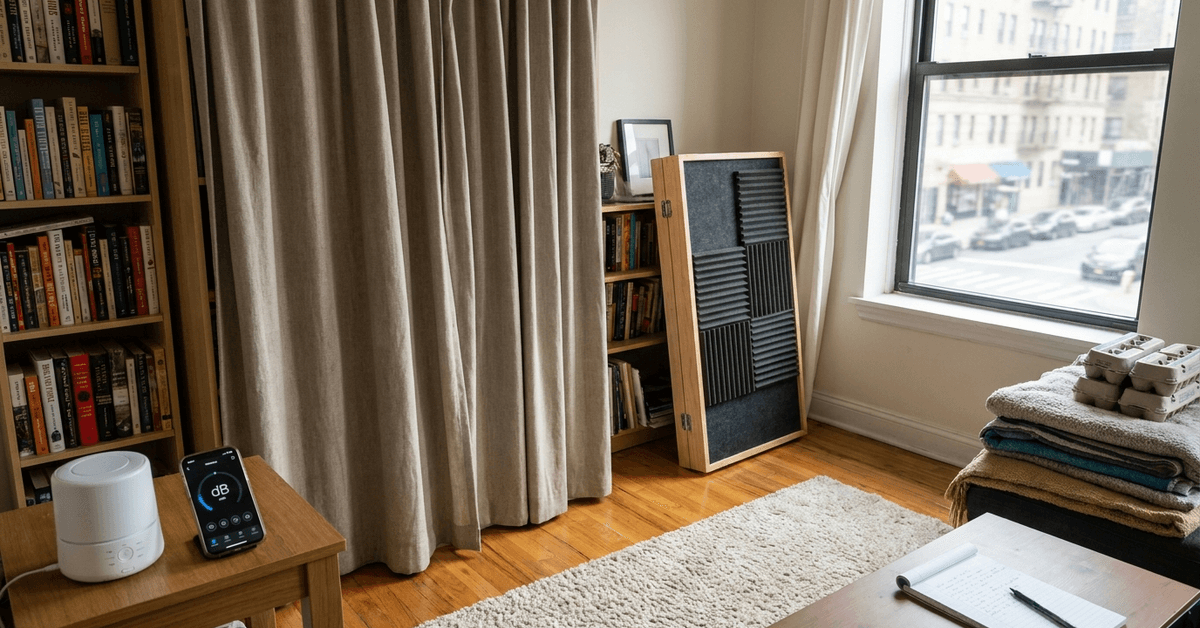
- Rugs and Carpets: Adding a large area rug, especially with thick padding underneath, can decrease noise transmission across floors and even between rooms.
- Heavy Curtains: For walls close to windows or doors, these make an immediate difference. They are simple to hang and easily removable for renters.
- Fabric-Covered Furniture: Placing a bookshelf or fabric sofa directly against a shared wall can noticeably reduce sound passing through.
Rugs are often the best first step in rooms with laminate or wood floors.
Temporary Wall Panels and Foam Tiles
- Acoustic Foam Tiles: Lightweight panels that stick onto walls using removable adhesive strips. These are widely available online and cut noise reflections inside a room.
- Portable Sound Panels: Freestanding panels (sometimes foldable) can be placed where needed, then stored away when not in use. These work well for those who occasionally host guests or work from home.
Weatherstripping and Door Sweeps
- Self-adhesive Weatherstripping: Apply to door gaps and window frames to block sound leaks, not just air drafts. Simple to install and remove.
- Door Sweeps: These attach to the bottom of doors to block the gap. City apartments often have larger-than-average gaps that contribute to hallway noise.
Room Arrangement Techniques That Work
The placement of everyday items is a highly underrated hack for sound management. Furniture arrangement can greatly impact the amount of noise entering a room from a shared wall.
Best Ways to Rearrange Furniture
- Position wardrobes, bookshelves, or storage units against the noisiest wall. The bulk acts as an extra layer of insulation.
- Angle beds or seating away from shared walls. This can sometimes cut intrusive sounds by half, simply by moving the head of a bed.
- For open-plan studios, section off areas with movable bookcases or even folding screens, creating a sense of privacy plus an extra sound barrier.
In compact flats, even minor changes can help—one wardrobe can act as a shield between you and a noisy stairwell, especially noticeable in cities like Amsterdam or Barcelona.
Tech Tools and DIY Apps for Urban Renters
Modern living often brings modern problems. But it also delivers technology for tracking, masking, or minimizing unwanted sounds. Using the right apps and gadgets can help manage city noise instantly.
White Noise Machines and Smart Speakers
- LectroFan: A popular white noise machine that blocks a range of external sounds. Suitable for bedrooms and home office use.
- Google Nest Mini: Works well as both a speaker and a white noise device. Can be controlled by phone, useful for timed sound masking.
- Bose Portable Smart Speaker: High-quality sound, excellent for those who prefer calming playlists as a backdrop to city life.
Sound Level Meter Apps
- Decibel X (iOS/Android): Allows renters to measure actual noise levels in decibels. This can help document persistent noise issues for building managers or local authorities.
- Niosh Sound Level Meter: A respected app for more accurate readings, especially useful for comparison over different times of the day.
Tip: Keep a Log
- Record times when noise is most disruptive, including decibel readings and sound sources.
- Provide this info to your landlord or building management if repeated issues occur, especially in dense city buildings like those in Sydney or Madrid.
DIY Soundproofing on a Budget
City renters often balance improvements with cost and portability. There are creative, low-cost solutions using everyday materials that deliver meaningful results.
Homemade Sound Baffles
- Egg Cartons: Although not very attractive, these do break up sound reflection if aesthetics are not a top concern. They stick to the wall using removable adhesive putty.
- Blankets: Heavy moving blankets hung on problematic walls or doors can mute voices or TV noise.
- Yoga Mats: Attach rolled-out mats to the wall for temporary dampening. These are easy to remove and store if needed.
Cost-Efficient Acoustic Caulk
- Green Glue: A specific type of acoustic caulk, this product fills cracks and seams in walls, corners, or around outlets. It is especially helpful in older buildings where air (and noise) can leak through small openings.
- AcoustiSeal: Another option for sealing minor gaps. This comes in tubes like standard caulking and is suitable for renters because it can sometimes be peeled away later.
Green Glue is commonly cited among professional installers for non-invasive soundproofing jobs.
Legal Solutions and Neighbor Communication
Sometimes, simple hacks are not enough. If noise issues persist, there are structured approaches that respect city laws and apartment living etiquette.
Check Local Noise Ordinances
- Many cities establish ‘quiet hours’ during overnight periods. Examples include 11 p.m. to 7 a.m. rules in cities like Munich, Chicago, or Vancouver.
- If issues occur during these hours, document incidents for future reference.
Open Communication with Neighbors
- Knock and introduce yourself. Residents may not be aware they are causing a disturbance.
- Share information about thin walls and suggest adjusting speaker or furniture placement from their side.
- In many urban apartments, conflicts are resolved faster through dialogue rather than formal complaints.
Escalating to Building Management
- Keep written logs and correspondence. Use apps to record sound levels (with time and context).
- Request mediation or a written complaint if needed. Landlords in cities like San Francisco or Milan often follow up quickly because excessive noise can impact building ratings.
Conclusion
Living comfortably with shared walls in an urban apartment does not require major renovations or high costs. Real-world solutions include strategically placed rugs and curtains, affordable temporary panels, sound apps, and open communication.
Some methods are quick fixes while others help build long-term peace. Combining several techniques and adapting them to your city and building type can make a significant difference.
For renters and owners alike, small adjustments often deliver the greatest peace of mind and a more enjoyable city home.