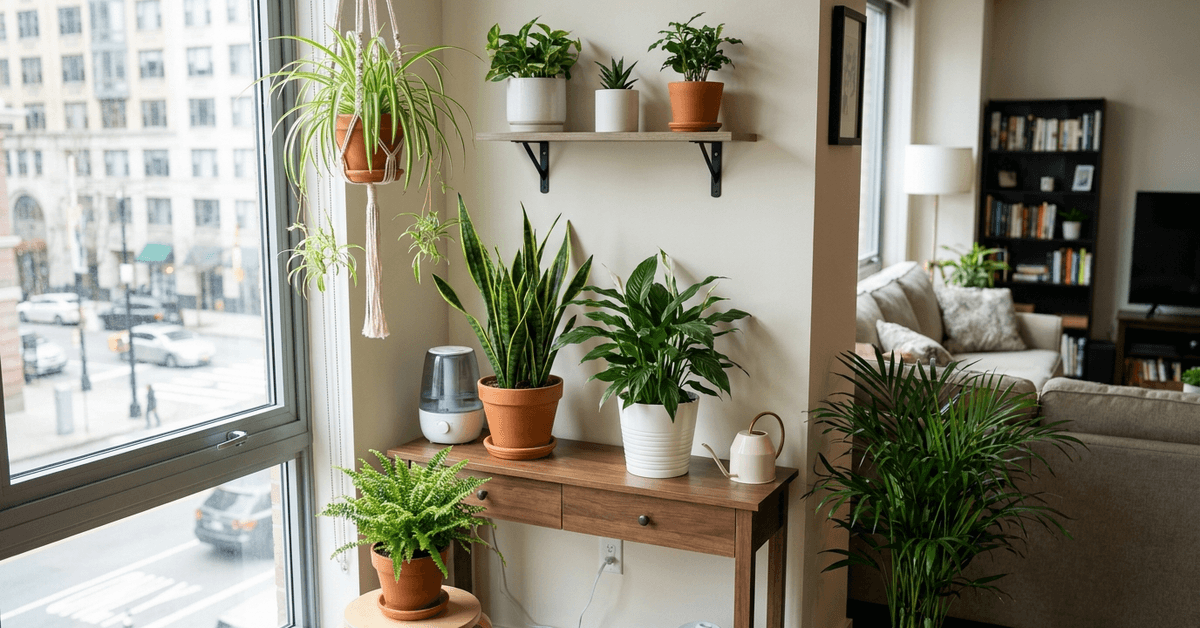
City apartments often have less-than-ideal air quality because of traffic, noise, and limited ventilation. Living near busy streets in cities like New York or London, it’s easy to feel the effects of dust and smog.
This guide is for city dwellers who want cleaner air, calmer spaces, and healthier homes. Simple plant choices can lead to noticeable changes in indoor well-being and comfort.
Why indoor air quality matters in city apartments
Urban apartments tend to trap pollutants. Everything from cars, construction dust, and chemical cleaners adds to indoor air issues.
Studies from the Environmental Protection Agency (EPA) often show that indoor air can be two to five times more polluted than outdoor air. Small steps can make a difference.
How do air-purifying plants improve your apartment?
Plants act as living air filters. Through photosynthesis, they absorb carbon dioxide and other toxins, releasing oxygen.
Even basic options, like a spider plant or peace lily, can help reduce common pollutants such as benzene or formaldehyde.
Best air-purifying plants for city apartments
Peace Lily
The Peace Lily thrives in low-light environments and has glossy leaves. It’s known to filter benzene, formaldehyde, and trichloroethylene.
It is ideal for shady corners or bathrooms. However, it is mildly toxic to pets if ingested.
Snake Plant (Sansevieria)
Snake plants tolerate neglect and low light. They’re well-suited for busy city dwellers who might forget regular watering.
This plant is practical for bedrooms since it converts CO2 to oxygen at night, helping improve sleep quality.
Spider Plant
Spider plants grow fast and survive with little attention. They filter out carbon monoxide and xylene, common in urban settings.
Well-suited for small spaces, and non-toxic for pets, making them a very practical choice for families.
Pothos
Pothos, with its trailing vines, is very adaptable. It removes formaldehyde and toluene from the air and adds greenery to shelves or hanging baskets.
Although beautiful, it is best kept out of reach of pets.
Bamboo Palm
The Bamboo Palm brings a tropical feel and can grow in low-light corners. It is effective at filtering both benzene and trichloroethylene.
It can reach up to 6 feet if cared for properly, making it visually striking in living rooms.
Boston Fern
Boston ferns are classic apartment plants. They target formaldehyde and require more humidity, making them ideal for kitchens or bathrooms.
Regular misting keeps the fronds healthy in drier apartment environments.
Simple care tips for urban plant owners
- Select low-maintenance species for easier routines.
- Group plants together for extra humidity.
- Rotate pots weekly for even growth.
- Use apps like Planta for reminders on watering and repotting.
- Choose containers with drainage to avoid root rot.
- Wipe leaves occasionally to prevent dust buildup.
Maximize air quality: positioning and placement
Placing plants near windows lets them get more light and air movement. In city settings, this helps the purifying process.
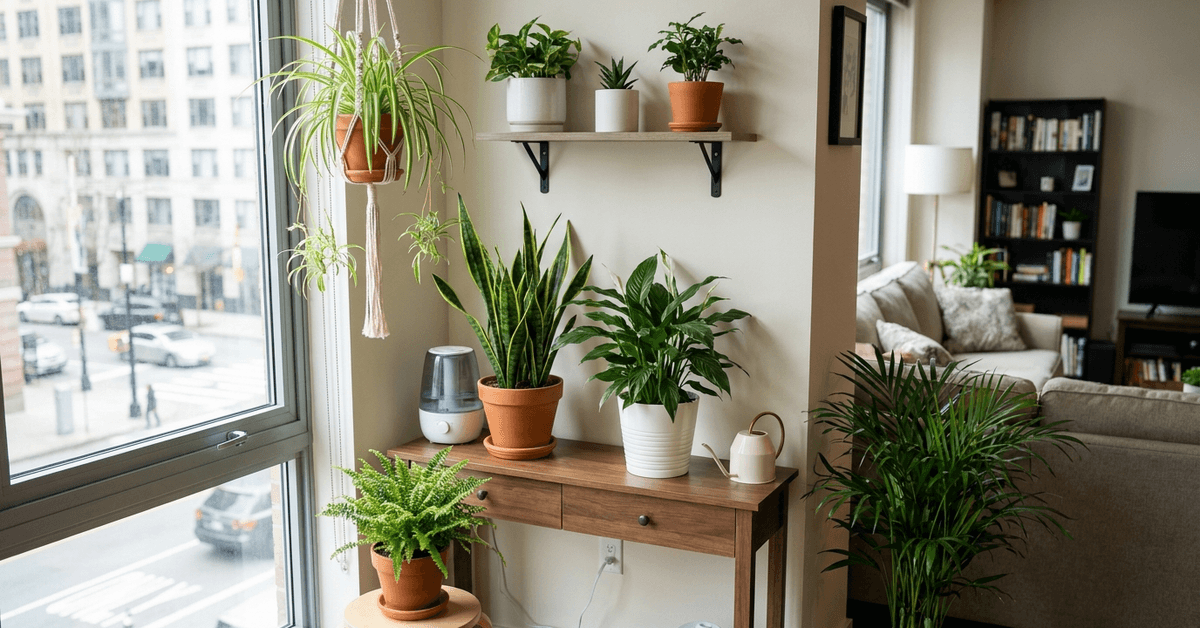
Try corner groupings, shelves, or hanging baskets to increase greenery without cluttering valuable floor space.
Managing plant care in a busy city lifestyle
Life in fast-paced cities like Tokyo or Paris doesn’t always allow for gardening breaks. Automating care makes things smoother.
Self-watering pots
Busy professionals might prefer self-watering containers, which maintain consistent moisture levels.
Scheduling via apps
Apps like Gardenia send notifications for fertilizer or sunlight tips based on specific plants. This removes most guesswork for beginners.
Challenges: urban limitations and solutions
City apartments can have low light, dry air, or tiny footprints. Not every plant will thrive in every spot.
- Opt for low-light plants if windows face north or are blocked by buildings.
- Add humidity with a small tray of water and pebbles if air is dry.
- Choose compact species or vertical gardens where space is tight.
Pet-safe air-purifying plants
Not every air-purifying plant is safe around pets. Households with cats or dogs have specific needs.
- Spider Plant – Safe for cats and dogs.
- Bamboo Palm – Non-toxic to pets according to ASPCA.
- Avoid lilies and pothos in pet-accessible areas.
City-specific options: choosing based on your environment
Cities like Singapore have high humidity, while Los Angeles might be drier. Regional choices affect plant selection.
- In humid environments, Boston ferns and peace lilies thrive naturally.
- For drier cities, snake plants and pothos do well with less water.
Apps like Sun Seeker can track real-time indoor light patterns, so placements fit each room’s conditions.
Indoor plant trends: maximizing style and air quality
City apartments now feature living walls, floating planters, and minimalist pots. Design and wellness trends blend aesthetics with function.
- Living walls use multiple air-purifying plants vertically for style and effect.
- Floating pots add greenery without crowding shelves or floors.
Practical Advice for Long-Term Plant Success
Healthy plants need more than occasional watering. A consistent care routine helps prevent root problems, pest damage, and seasonal stress. Paying attention to small changes can keep indoor or balcony plants growing well for years.
Repot Plants Regularly
Repot most plants when roots become crowded, soil drains poorly, or growth slows. Many plants benefit from fresh soil and a slightly larger container every year or two.
Avoid moving them into pots that are much larger than the root system, as excess soil may retain too much moisture.
Check for Pests
Inspect leaves, stems, and the surface of the soil during routine care. Aphids, spider mites, and other pests often hide beneath leaves or near new growth. Early detection makes treatment easier and reduces the chance of pests spreading to nearby plants.
Adjust Watering by Season
Plant water needs change throughout the year. Indoor heating can dry soil quickly in winter, while air conditioning and strong summer sun may also increase moisture loss. Check the soil before watering instead of following a fixed schedule.
Track What Works
Keep a simple journal or use a plant diary app to record plant varieties, watering habits, repotting dates, and growth patterns. These notes help you repeat successful routines and avoid past mistakes.
Conclusion
Integrating air-purifying plants into city apartments can make a noticeable difference in daily air quality, comfort, and even aesthetics.
From classic peace lilies to quirky spider plants, each species has unique benefits for small, urban homes.
With mindful selection, simple tools, and practical care strategies, even the busiest city dweller can create a healthier, more inviting living space—one breath at a time.