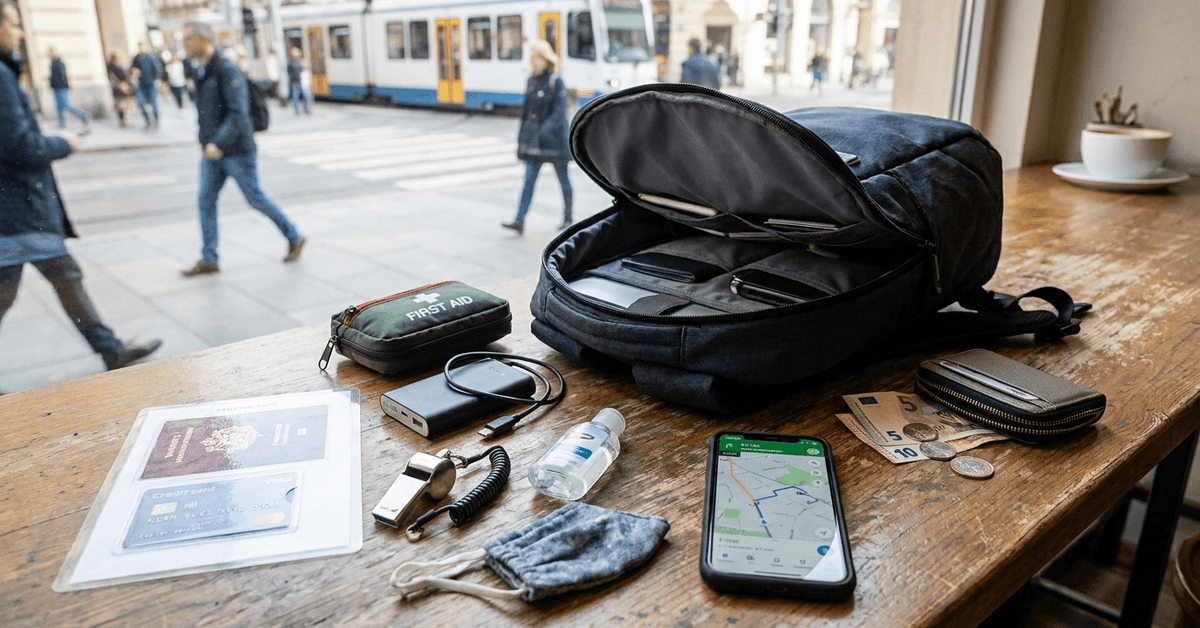
City days are full of excitement, but urban environments can present surprises. Packing smart creates peace of mind whether exploring Paris, New York, or Tokyo. Here are seven safety items that can help you feel prepared for almost anything.
Why Urban Safety Matters
Urban spaces are filled with people, movement, and unpredictability. Even experienced city-goers might misplace things or face unexpected situations.
Packing key safety items helps you avoid stress, stay in control, and respond calmly in crowded or unfamiliar areas.
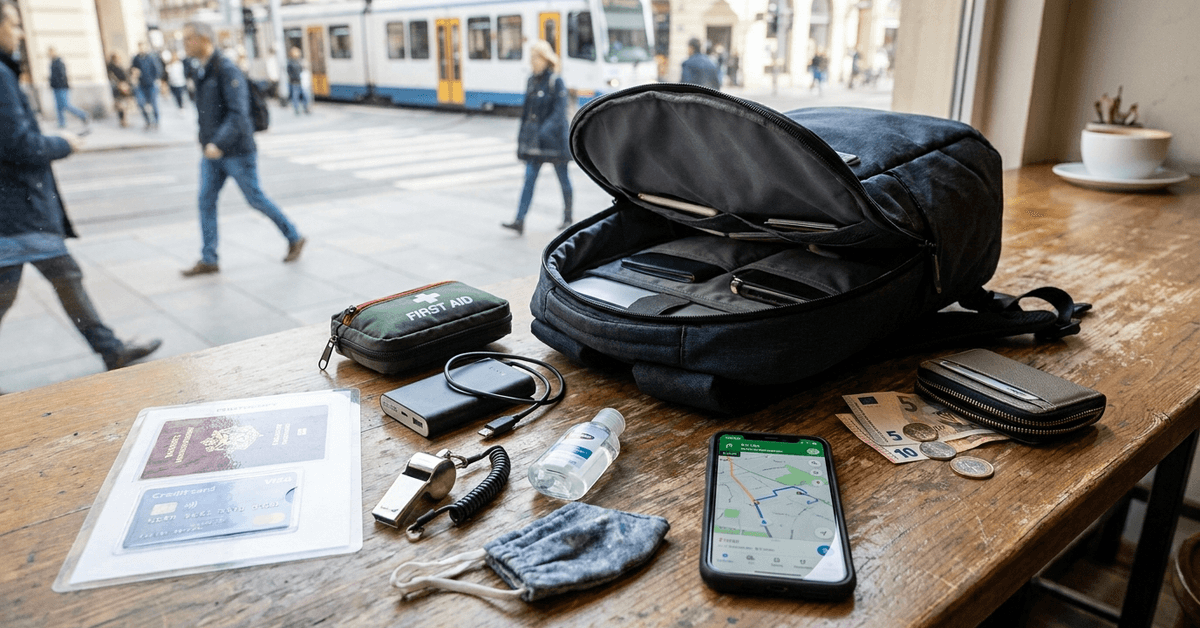
1. Personal Identification
Keep ID Handy and Secure
Carrying valid ID is essential in any major city. Some places may require proof of identification for public transit or building entry.
Instead of carrying all original cards, a safe option is to pack a photocopy of your main ID or store a digital copy in a secure phone app like 1Password.
- Attach a printed copy in a discreet pocket of your daypack.
- Consider a slim RFID-blocking card holder for extra safety.
2. Emergency Contact Card
Fast Access Information
Accidents happen unexpectedly. Having emergency details visible can save precious time for helpers.
A recommended approach involves printing an emergency contact card with your name, phone, allergies, and a local contact.
- Update details before every trip.
- Place in an outer slot or attach inside your daypack’s lining.
3. Compact First Aid Kit
Be Ready for Minor Injuries
City trips often involve extensive walking. Small scrapes, blisters, and cuts are common, especially in unfamiliar environments.
Packing a mini first aid kit gives you quick solutions without searching for pharmacies.
- Include adhesive bandages, a few antiseptic wipes, and pain relief tablets.
- Add a couple of allergy pills if you have known sensitivities.
4. Portable Phone Charger
Stay Connected Anywhere
City journeys can drain phone batteries through navigation and use of safety apps. A dead phone limits emergency communication and contactless payments.
A slim power bank ensures your devices stay powered. Brands like Anker and RavPower rank high for reliability.
- Pack a short, durable charging cable.
- Check local plug types if you plan to charge in cafes.
5. Whistle or Alarm Keychain
Simple Deterrents for Emergencies
Urban safety is about both prevention and response. Many daypacks have built-in whistle buckles, but free-standing solutions work well too.
An emergency alarm keychain can emit a loud noise to attract attention. Several are available from trustworthy brands like Sabre.
- Clip the whistle or alarm near your bag’s zipper.
- Show close friends or family how it works before heading out.
6. Travel-Sized Sanitizer and Mask
Protect Yourself in Crowds
Metro rides and busy squares mean frequent exposure to germs. Staying healthy is non-negotiable, especially in peak season or new countries.
A small sanitizer bottle and a foldable mask, like those from Uniqlo or Blue Bear, can make urban trips safer and more comfortable.
- Store sanitizer in a quick-access pocket.
- Cotton or surgical masks fit compactly into an ID pouch.
7. Location-Sharing and Safety Apps
Stay Informed and Reachable
Maps are helpful, but modern safety apps provide next-level security, especially when traveling solo or at night.
Top-rated options like GeoZilla (for sharing your real-time location) and Citymapper (navigation with safety tips) give tailored information.
- Set up location sharing with family or friends before heading out.
- Check app permissions and emergency features.
Bonus: Cash and Mobile Payment Backup
When Tech Fails
Card readers, apps, or wallets might not function everywhere. Some small shops, markets, or taxis might only accept cash in cities like Rome or Buenos Aires.
Having a bit of local cash, plus backup payment apps like Apple Pay, can prevent hassles.
- Keep cash in two separate pockets to limit loss.
- Familiarize yourself with local payment trends before arriving.
Smart Packing Strategies
Packing light does not mean leaving important items behind. A well-organized bag keeps essentials secure, easy to reach, and less likely to become lost during busy urban trips.
Use Inner Compartments
Choose a bag with inner zip pockets or slim organizers for identification, money, cards, and electronics. Separating valuables from everyday items reduces clutter and helps prevent accidental exposure when opening your bag.
Add Small Travel Pouches
Use compact pouches or packing cubes to group similar supplies. A small medical pouch can hold first aid items, medicines, and hand sanitizer, while another can organize chargers and cables. Clear or labeled pouches make items easier to find quickly.
Choose the Right Daypack
Slim, anti-theft backpacks are practical for crowded streets and public transportation. Brands such as Pacsafe and Osprey offer models with hidden zippers, secure compartments, and cut-resistant materials.
Improve Visibility and Security
Light-colored interiors make small items easier to locate. A lighter exterior color may also help you notice stains, damage, or signs of tampering sooner. Keep frequently used items accessible while storing valuables deeper inside the bag.
Quick Checklists for the City
Carrying a few essential items can make city travel safer, smoother, and less stressful. A compact emergency kit is especially helpful when using public transportation, exploring unfamiliar neighborhoods, or spending a full day away from home.
Identification and Emergency Details
Keep a photocopy of your main identification document or store a secure digital copy in a protected app. Carry an emergency contact card listing important phone numbers, medical information, and your accommodation address.
Basic Health and Safety Supplies
Pack a small first aid kit with bandages, antiseptic wipes, and any personal medication. Pocket hand sanitizer and a spare mask are also useful in crowded spaces or when washing facilities are unavailable.
Communication and Personal Security
Bring a fully charged portable power bank to keep your phone available for maps, calls, and emergencies. A mini whistle or personal alarm can help attract attention if you feel threatened or become injured.
Navigation and Payment Backups
Install reliable city navigation, transit, and safety apps before leaving. Download offline maps when possible. Carry a small amount of cash along with a backup card or mobile payment option in case one method fails.
Keep Everything Accessible
Store essentials in a secure but easy-to-reach pocket or small organizer. Check your kit regularly and replace expired items.
Conclusion
Navigating urban spaces requires some planning, but the right kit builds confidence. No matter the city, carrying these essential safety items lets you focus on discovering without unnecessary worry.
Preparedness lets you truly enjoy every street, park, and moment. Staying alert and equipped means you experience the city as it is, ready for whatever your adventure brings. For more on practical urban travel, explore other resources at Instacitizen.com.