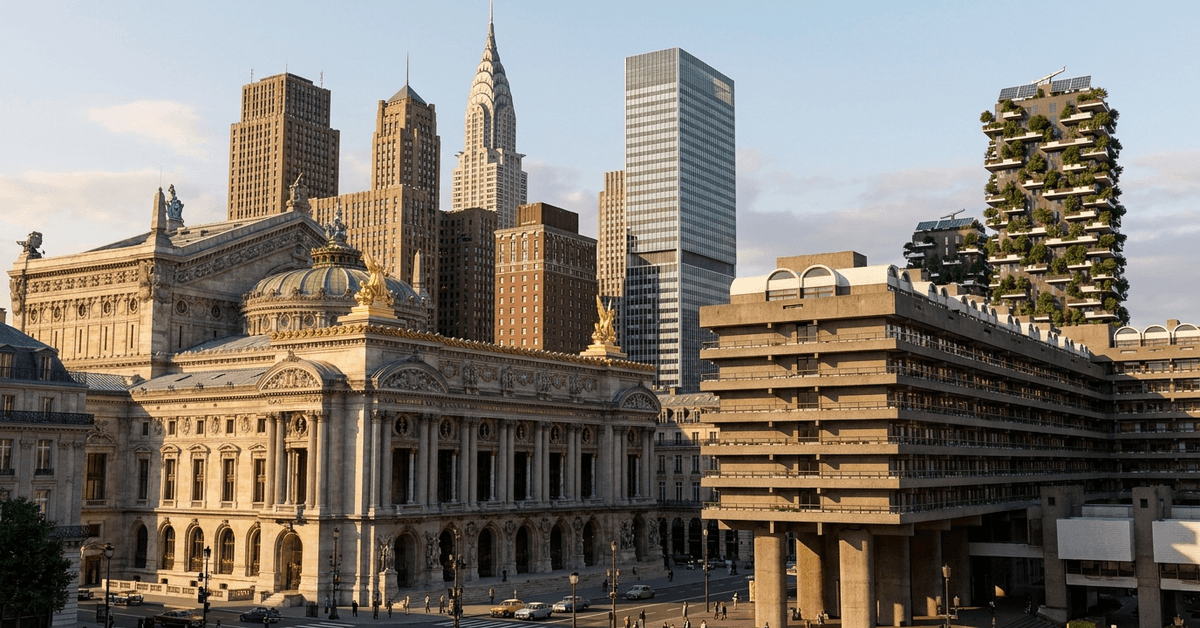
Modern city skylines display a fascinating mix of design eras. Each building tells a story from a different time and philosophy. This journey through architectural history brings context to what we see today.
Roots of Urban Architecture: Essential Origins
Urban architecture began shaping city life in the 19th century. Factories and dense housing reflected fast-growing industries. Brick and stone became the default for both beauty and function.
Specific cities, like London and Berlin, still preserve spectacular 19th-century blocks. Their surface textures and tall windows reveal ambitions of prosperity. In New York, brownstone facades echo early American tastes.
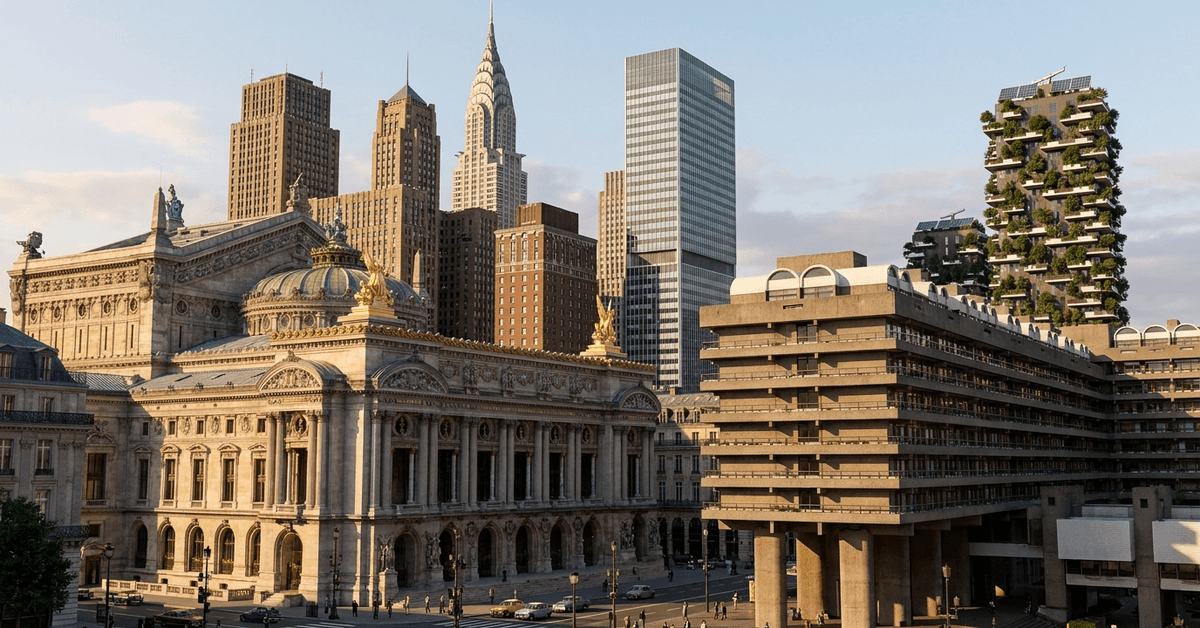
As steel production grew, architects saw new possibilities. Suddenly, cities like Chicago and Paris could build much higher and lighter.
Classical Inspirations: Neoclassicism and Beaux-Arts
Neoclassicism’s Return to Ancient Roots
Some modern cities revived ancient Greek and Roman looks in the early 20th century. This style, called Neoclassicism , favored columns, domes, and clean symmetry.
Washington, D.C.’s government buildings use this approach. So does the British Museum in London.
The Grandeur of Beaux-Arts
Beaux-Arts buildings often appear theatrical. They’re marked by grand entrances, sculpted details, and strong geometric plans.
Paris’ Palais Garnier and San Francisco’s City Hall spotlight this influence. Many banks and courthouses adopted Beaux-Arts by the early 1900s.
The Rise of the Skyscraper: Steel, Glass and New Heights
Chicago’s Pioneering Approach
With the advent of steel-frame construction , the late 1800s Chicago changed city skylines forever. Designs became taller and thinner.
Early examples include the Home Insurance Building — considered the world’s first skyscraper. Simple, vertical lines made these buildings efficient and elegant.
New York’s Art Deco Towers
In the 1920s and 1930s, New York embraced Art Deco. Think of the Chrysler Building’s zigzag facades and sparkling crown. The Empire State Building followed, mixing glamour with industrial progress.
Modernism: Simplicity and Function Take Hold
From Bauhaus to International Style
The Bauhaus movement arrived in Germany in the 1920s. Designers like Walter Gropius abandoned tradition for clean lines and open interiors.
Le Corbusier and Ludwig Mies van der Rohe spread these ideas worldwide. Their glass and steel boxes work for offices, apartments, and museums alike.
Global Influence and Unique Local Versions
Modernist ideas travelled fast. In São Paulo, Brazil, Oscar Niemeyer’s government buildings took curvy shapes. Sydney’s Opera House shows a modernist take inspired by nature.
Brutalism: Concrete Expression for Public Spaces
After World War II, cities needed affordable, durable structures. Brutalism used raw concrete and modular forms to express honesty and strength.
London’s Barbican Centre and Boston City Hall stand as classic examples. They may seem harsh, but their forms encourage creative social uses.
Postmodern Playfulness: Breaking the Mold
In the 1980s and 1990s, some architects rebelled against strict grids. Postmodernism added color, irony, and historical references.
The Portland Building by Michael Graves and Sony Tower in New York both showcase bold facades. These buildings nod to tradition but twist the rules.
Contemporary Styles: Sustainability and Technology
Green Building Innovations
Today’s cities try to balance form, comfort, and ecology. Green roofs , solar panels, and upcycled materials are common features.
Singapore’s Gardens by the Bay and Milan’s Bosco Verticale use plants for insulation and beauty. Tokyo’s Shibuya Scramble Square integrates eco-tech for energy savings.
Digital Tools in Modern Design
Apps like ArchiMaps provide interactive city guides to architectural landmarks. Tools such as Google Earth help users investigate city layouts and building histories in detail.
Smart Cities and Responsive Spaces
Connected buildings and sensors adjust lighting and climate for efficiency. In Barcelona and Toronto, planners test smart grids to support large populations and conserve resources.
Regional Blends and Local Character
Scandinavia’s Functional Elegance
Stockholm and Copenhagen adapt Scandinavian Modernism to urban cold climates. Large windows provide light, while wood offers warmth.
Middle Eastern and Mediterranean Revival
In Dubai, classic arches and mashrabiya screens echo ancient patterns. Mediterranean cities like Barcelona mix Gothic traces into new public spaces. Old foundations still influence new city planning.
Architectural Styles in Practice: Where to See Major Movements
- Art Deco: Miami Beach’s Ocean Drive, New York’s Rockefeller Center
- Bauhaus/Modernism: Tel Aviv’s White City, Berlin’s Bauhaus-Archiv
- Brutalism: London’s National Theatre, Washington D.C.’s Hirshhorn Museum
Tips for Exploring Architectural History in Your City
Discovering local architecture can reveal how a city developed, what its residents valued, and how different historical periods shaped its streets.
With a mix of guided activities, digital tools, and library research, you can turn an ordinary walk into a meaningful look at the city’s past.
Join a Guided Architecture Walk
Many cities offer walking tours led by historians, architects, or local volunteers. These tours may focus on specific neighborhoods, building styles, famous designers, or preservation projects.
Check local event platforms, tourism websites, museums, and heritage organizations for upcoming schedules. Guided walks are especially useful when architectural details are easy to overlook without expert explanation.
Use Mobile Tools for Self-Guided Tours
Audio-walk apps can provide stories, directions, and historical context while allowing you to explore at your own pace.
Download the tour and map before leaving in case mobile service is unreliable. You can also save interesting buildings in a map app to create a personalized route.
Research Through Public Libraries
Public libraries often hold local history books, old maps, photographs, newspapers, and planning archives. These materials can show how streets and buildings changed over time.
Review them before your walk, then compare historical images with what remains today. Taking notes or photos can help you build a personal record of the city’s architectural timeline.
Conclusion
The history behind common architectural styles in modern cities is a rich blend of invention and adaptation.
Each shift builds on what came before, reacting to new technology, regional influences, and the challenges of urban life. From sturdy bricks to shimmering glass towers, the evidence surrounds us daily.
Exploring these layers reveals not just design preferences but how cities solve living, working, and environmental needs. Every street, it seems, holds a piece of the ongoing story.