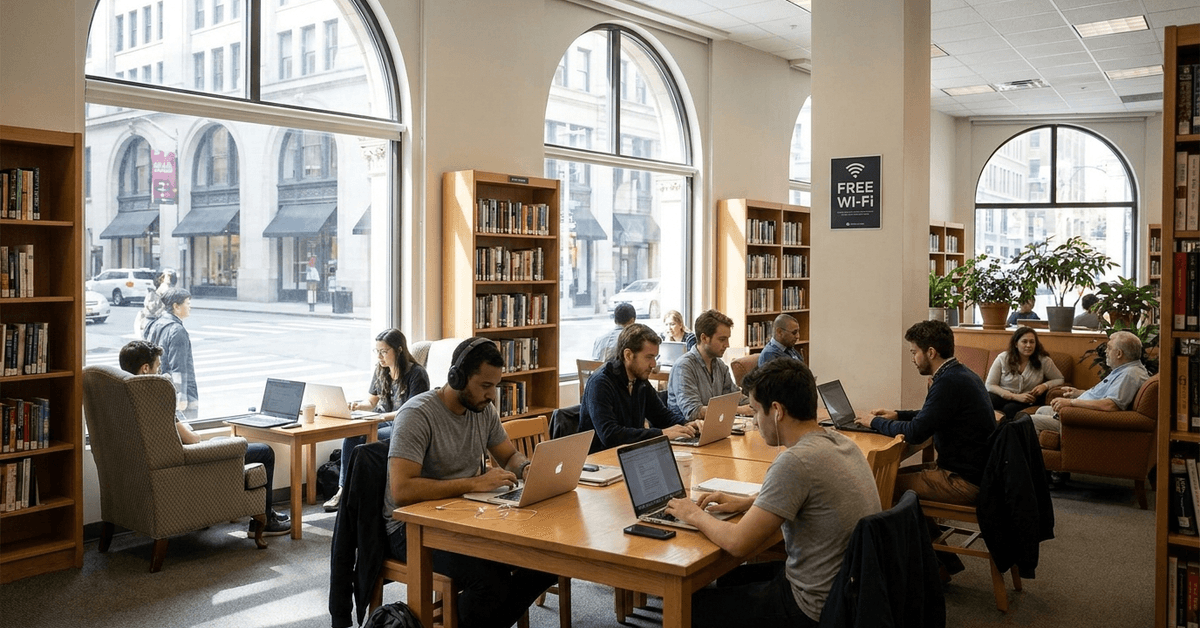
Living in a city means options for remote work and study are everywhere. Yet, finding quiet, well-equipped spots that do not cost anything is not always simple.
This guide spotlights libraries and free co-working spaces that truly cater to urbanites. Digital nomads, students, freelancers, and even curious residents will all find places that fit their needs.
Why Libraries Remain Essential City Workplaces
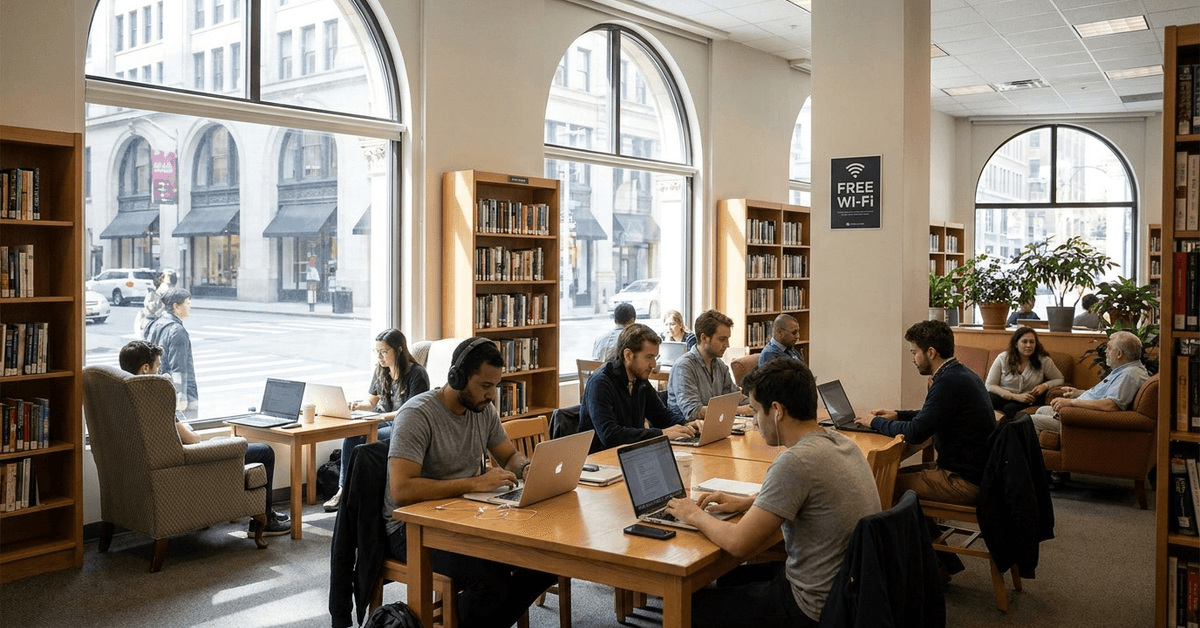
Libraries continue to be among the most reliable public spaces. They offer free Wi-Fi, comfortable seating, and an atmosphere ideal for focus.
Unmatched Silence and Focus
The main draw for many is the quiet. Unlike cafes, there is no background music here. The design is meant for concentration.
Wide Access Hours and Locations
City libraries generally open early and close late. Many have Saturday and some Sunday hours, so fitting work into any schedule is possible. For example, the New York Public Library operates from morning into early evening most days.
Free Resources for Any Project
From printing and scanning to meeting rooms, most city libraries provide the basics. The Boston Public Library, for instance, even provides podcasting studios for public use.
City Libraries Worth Visiting
- New York Public Library – Bryant Park branch (NYC)
- Bibliothèque publique d’information – Centre Pompidou (Paris)
- Stuttgart City Library (Germany)
- Pierce County Library – Downtown Tacoma (USA)
- State Library Victoria (Melbourne)
All of these locations offer flexible seating, free Wi-Fi, and growing digital collections. Some spaces can be reserved in advance using their official websites or with the Libby app for digital checkouts.
What Free Co-working Spaces Provide
Free co-working spaces fill the gap between libraries and paid office rentals. They often target entrepreneurs and freelancers.
Collaborative Atmosphere
Free co-working spaces encourage interaction. Expect occasional networking events or workshops where meeting new people is part of the usual experience.
Essential Amenities
The basics, like Wi-Fi and desks, are universal. Some spaces also include charging stations, community bulletin boards, and sometimes even complimentary coffee.
Top Free Co-working Spaces in Major Cities
- Impact Hub – Free Open House days (London, Berlin, Vienna)
- Municipal Innovation Labs (often city council-sponsored in cities like Barcelona and Toronto)
- Google Campus – Free café area with power and Wi-Fi (Madrid, Warsaw)
- POC Space at State Library Victoria (Melbourne)
- Urban Office by Instacitizen Collective (rotating urban pop-up events, details on instacitizen.com/events)
Some require pre-registration via apps like Meetup or Eventbrite. Checking their schedule saves time and effort.
Step-by-Step: How to Find the Right Space for You
- Define your needs: Is it quiet study or networking?
- Consult local library or council websites for up-to-date hours.
- Use apps like Libby (for libraries), Places to Work, or Workfrom for comparing free workspaces.
- Look at user reviews, especially for Wi-Fi reliability and seating.
- Arrive early to guarantee a spot. Secondary locations nearby can help in case the space is full.
Tips to Make the Most of Free Workspaces
- Carry a backup charger – outlets fill up fast in popular places.
- Pack a light snack; some locations do not allow food vendors or on-site cafés.
- Respect space rules and time limits, if any.
- Bring your own headphones, even in libraries, for deeper focus amid whispering or quiet activity.
- Rotate your spots every so often to keep your routine fresh and your productivity high.
Safety, Etiquette, and Local Policies
Public spaces often have their own rules designed to protect visitors, staff, and shared facilities. Understanding these expectations before arriving can help you avoid delays and make the experience more comfortable.
Check Entry Requirements
Libraries, cultural centers, and free co-working spaces may require visitors to sign in, show identification, or register in advance. Some locations also limit access to local residents, students, or members during busy periods.
Prepare for Security Procedures
Certain venues conduct bag checks or restrict large backpacks, food, drinks, and outside equipment. Carry only what you need and keep personal items organized so entry checks are quicker.
Respect Shared Spaces
Keep conversations and phone calls at an appropriate volume. Follow posted rules about seating time, device use, photography, and cleaning up after yourself. These small actions help maintain a welcoming environment for everyone.
Confirm Policies Before Visiting
Check the venue’s official website for opening hours, holiday closures, registration steps, and current visitor guidelines.
If information is unclear, call ahead. Spending a few minutes confirming the rules can prevent wasted travel, denied entry, or unexpected fees.
Useful Apps and Tools for Urban Workseekers
Finding a comfortable place to work in a busy city can be easier with the right digital tools. These apps help users locate work-friendly spaces, access reading materials, improve focus, and compare nearby options before leaving home.
Find Work-Friendly Locations
Workfrom offers a crowdsourced map of cafés, libraries, hotel lobbies, and other spaces suitable for remote work. Listings may include details about Wi-Fi quality, noise levels, seating, and power outlets.
Access Free Reading Materials
Libby allows users with participating library cards to borrow ebooks and audiobooks. It can be useful during breaks, commutes, or quiet work sessions in public libraries.
Improve Concentration
Focus@Will provides music playlists designed to support concentration. Headphones can help reduce distractions in cafés or shared workspaces, although volume should remain low enough for situational awareness.
Compare Nearby Options
Google Maps helps users review opening hours, photos, customer feedback, and walking directions to lesser-known workspaces. Checking recent reviews may reveal useful details about laptop policies or seating limits.
Use Several Sources
No single app provides complete information. Comparing several tools improves your chances of finding a suitable, convenient, and productive place to work.
Conclusion
Cities never stop changing, but the need for quality, public places to work and learn stays constant. Whether drawn to the steady focus of a library or the dynamic connections of a co-working space, today’s cities offer something for everyone.
Armed with the right info and tools, anyone can carve out productive, free time in the heart of the urban jungle. Try rotating your go-to spots and observe, sometimes a change of scene makes all the difference for fresh motivation and a better workday.